Dental Implant vs Bridge: How to Choose
2026-08-17
You've been chewing on one side for a while now. The gap is there every time you look in the mirror, and the question has been sitting with it: what goes in that space? One dentist mentioned a bridge. A friend swears by her implant. And underneath it all is the worry that you'll pick wrong — spend thousands, and find out later there was a better answer for your mouth.
The dental implant vs bridge decision matters more than most people are told. The two treatments fill the gap in different ways, and they treat the teeth around the gap differently. One of them asks two of your other teeth to help pay for the replacement. The other leaves them alone.
Here's how each works, what they cost at Viva Smile, and how to tell which one fits your situation.
What a bridge asks of the teeth next to the gap
A traditional bridge is three connected pieces: a replacement tooth in the middle, held by crowns on the teeth on either side of the gap. To fit those crowns, we reshape both anchor teeth, removing enamel all the way around. That removal is permanent. From that day forward, those two teeth will always need to be covered.
If the anchor teeth are already heavily filled or broken down, this can be a fair trade — they may need crowns regardless. But if they're healthy, you're reshaping two sound teeth to replace one missing one. That's the real cost of a bridge, and it never shows up on the bill.
What you get in return is speed. A bridge is made the same way a lab fabricated crown is: typically two visits over two to three weeks, no surgery. You have a full smile again in under a month.
One more thing to know: because the three pieces are joined, you can't floss between them the normal way. Cleaning under the replacement tooth takes a different technique, and keeping those anchor teeth healthy is what keeps the whole bridge in place.
What an implant does that a bridge can't
A dental implant replaces the whole tooth, root included. We place a small titanium post into the jawbone where the tooth used to be. Over four to six months heals around the post. Then a custom crown goes on top — one that looks and works like a natural tooth.
Three to four visits from start to finish.
The teeth on either side of the gap aren't touched. No reshaping, no enamel removed, no crowns they didn't need. Ten years from now, whatever happens with those neighbors happens on their own terms — not because they were holding up your replacement tooth.
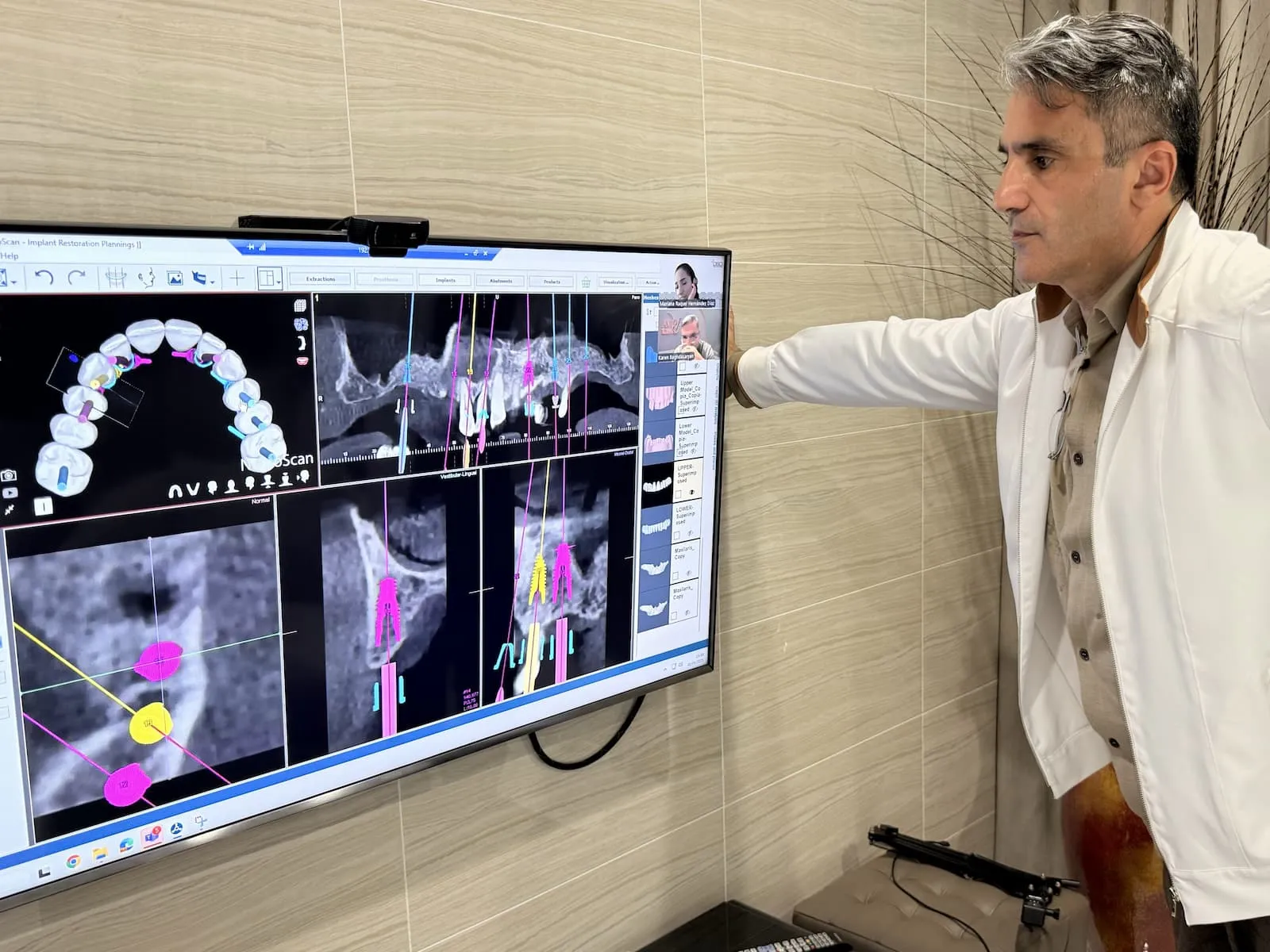
There's a second difference, and it's the one you can't see. Once a tooth's root is gone, the jawbone in that spot shrinks over time. A bridge sits on top of the gum, so nothing addresses that change. An implant is the only replacement that puts a root back into the bone
If the gap has been there for years, this is worth understanding:
Consequences of missing tooth.
The trade-off is time and a surgical step. Placement takes 60 to 90 minutes under local anesthetic — you feel pressure, not pain — and IV sedation is available if you'd rather be less aware of the procedure. Most patients manage the soreness with over-the-counter pain relief and are back at work the next day. Then the bone does its slow work for four to six months before the crown goes on. Implants placed this way succeed around 95% of the time over ten years.
Dental implant vs bridge: how the costs compare
At Viva Smile, a complete single-tooth implant — post, abutment, and crown — is $4,000. A three-tooth bridge runs $3,500 to $4,500 depending on the materials used.
Upfront, they're close. The difference shows up over time. The crowns that anchor a bridge typically last 10 to 15 years with good care, and when a bridge needs replacing, the work involves three teeth, not one. An implant typically lasts longer than any other dental restoration. Its crown can chip or wear over the years, the same as a natural tooth — but in most cases you're maintaining one tooth, not three.
Insurance treats the two differently from plan to plan. We're in network with Delta Dental PPO, and either way, we'll check your specific coverage before you decide anything.
Dental implant vs bridge: when the bridge is the better choice
An implant isn't automatically the right answer. In my cases, a bridge earns its place when:
An implant isn't automatically the right answer. In my cases, a bridge earns its place when:
- The anchor teeth already need crowns. If the teeth beside the gap are broken down or heavily filled, they'd be crowned anyway — and the bridge's biggest cost disappears.
- There isn't enough bone, and grafting isn't the right fit. An implant needs enough jawbone to hold it securely. Bone can be rebuilt with a graft, but that adds three to six months of healing before the implant can be placed. Some patients would rather not extend the timeline.
- Weeks matter more than the trade-offs. A bridge is done in under a month. An implant takes four to six months. Sometimes life makes that decision for you.
- Your health history raises the implant's risk. Smoking significantly raises the risk of implant failure, and conditions like uncontrolled diabetes can too. That doesn't rule an implant out — it's something we go through with you individually.
None of this can be settled from an article, because the deciding factors — how much bone you have, what shape the anchor teeth are in — sit under your gum, where only an X-ray can see them.
How to find out which one your mouth needs
A dental exam at Viva Smile is $150, covered 100% by most PPO plans, and includes the X-rays this decision depends on [CONFIRM: exam includes X-rays]. You'll leave knowing what's under the gum — and whether an implant, a bridge, or something else entirely is the right call for you. When you're ready.
*Written by Dr. Káren Baghdasaryan, DDS, MBA, AAACD, AFAAID — the first DSD-certified clinician in Los Angeles.*